

Doming vs metal label: what is the difference?
Doming labels and metal labels are both premium choices for product branding, but they work in completely different ways. A doming label has a glossy polyester dome (about 1.5–2 mm thick) that is poured over a printed base layer; a metal label is 1 mm thin, made from 100% metal (tin, copper, brass or aluminium) with a subtle 3D relief. The choice depends on your product, your budget and how you want to fix the label.
Key features
- Doming labels: glossy resin dome (1.5–2 mm), self-adhesive only, mercury-free and RoHS/REACH-certified
- Metal labels: 1 mm thin, 100% solid metal, flexible, self-adhesive or magnet/screw/glue, from 250 pieces (below 250 is more expensive per piece)
- 3D effect: doming has a strong, glossy dome; metal label has subtle relief in the metal itself
- Bendability: doming is rigid; metal label follows the curves of, for example, bikes or furniture
- Fixing doming: self-adhesive only; metal labels are much more flexible
- Oxidation: tin, copper and brass can oxidise outdoors; aluminium stays good and is suitable for outdoor use
- Lead time: both 4–5 weeks after approval of free digital preview
- Minimum quantity: doming usually 250+; metal labels can be smaller, but then the price per piece rises sharply

When should you choose a doming label?
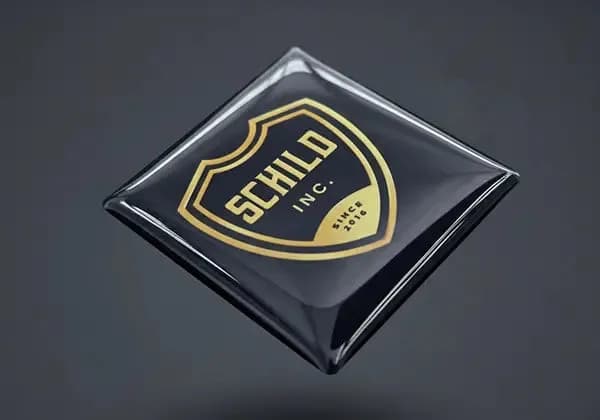
Doming labels shine when you want a glossy, three-dimensional look without a physical metallic effect. They are ideal if you want to protect a printed illustration, logo or coloured image under a crystal-clear little dome. The gloss gives a premium, encapsulated impression, as if the label lies under glass. More guides on this topic are in the category Doming & wooden labels.
In practice we see many doming labels go to cosmetics brands, bright consumer goods and designer accessories where the gloss and sparkling surface are part of the identity. You print in full colour, and the dome protects that against scratches and UV exposure. A common mistake is to think you can simulate metal materiality under a dome; that does not look truly convincing. For real metal you need a metal label.
Doming is also the only choice if you only want self-adhesive and do not need any other fixing method. You do not need a hole, no screw, no extra surface preparation.
When should you choose a metal label?
A metal label gives you something doming never can: real metal under your fingers. It feels premium, feels real, and oxidises (in many cases) in a characteristic way. A tin label turns bronze-coloured after months; an aluminium label stays silvery; copper and brass get their own patina. All versions and prices are on the page doming labels.

Choose metal if your product is curved or round, think bikes. A bike manufacturer always chooses the metal label because it is flexible and follows the curved frame. A 3 mm hard badge would be rigid and would not bend around a tube. Also on furniture, where the wood is waxed or oiled, self-adhesive sticks less well: then we recommend screw mounting or a hard badge with a hole.
From experience we know that metal labels also hold up better under mechanical stress. Bikes, tools, industrial uses, where a label now and then knocks against something, metal stays intact while a dome can tear.
Schild Inc. has produced metal labels since time immemorial and has already sold more than 800,000 pieces to over 1,200 business customers in 19+ countries. That volume gives us insight into what works: aluminium for outdoors (no oxidation), tin and copper for indoor design (characteristic patina), and brass if you want something gold-tinged.
3D effect: both have it, but in different ways
A common misunderstanding: "A hard badge has 3D, a label does not." Not true. Both a metal label and a hard badge can have 3D relief. The difference is visibility and depth. Read our guide on domed stickers.
With a metal label (1 mm thin) the relief is subtle, the contrast between the raised part and the flat part is small. You see it in light, especially at a certain angle. With a hard badge (2–3 mm thick) the same relief technique is much more dramatic: because there is more material, the deeper relief is highlighted more strongly and casts shadow.
Doming labels also have 3D in the form of the glossy dome itself; that dome is the 3D effect. You do not get relief in a metal sense, but you do get that faceted gloss.
Fixing and mounting
Doming labels are only self-adhesive. You stick them on. Done.

Metal labels offer more freedom: self-adhesive (standard with pre-mixed Lohmann adhesive for tin/aluminium or 3M for copper/brass), built-in magnet, screw mounting via a hole in the label, or permanent adhesive fixing. That flexibility makes metal handy for uses where self-adhesive is not enough.
Hard badges (which you would compare with labels, but larger and thicker) have a pre-drilled hole, no thread. You fix them with a screw or bolt through that hole, or with adhesive or magnet. They are not bendable. See our custom metal labels and discover the mounting flexibility that fits your product.
Material characteristics and durability
Doming labels are made from polyester and resin. They are UV-resistant, scratch-resistant (you can rub over them without damage), and mercury-free. They are RoHS, REACH, ELV and WEEE certified, which means no toxic substances, no heavy metals. They are therefore suitable for products that go to children or are used in food. A transparent doming variant also exists, perfect for QR codes. Read our guide on doming label electronics.
Metal labels depend on the material: More background on epoxy resin can be found on Wikipedia.
- Aluminium: stays silvery and does not oxidise. This is your choice for outdoors, for lots of sun, for a sea climate. For bikes, outdoor toys, outdoor gear.
- Tin: oxidises outside quite quickly (can turn bronze-coloured in months). For indoor design and premium products where that patina is part of the character.
- Copper and brass: also get patina, but green instead of grey. A luxury choice for high-end branding.
All metal labels have a protective layer (usually clear lacquer), but where metal is exposed (especially on engraved or edged parts), it can still be subject to oxidation. This is not a defect; it is material character. Our advice: do not put tin outdoors without regular checks; choose aluminium for outdoors.
Price and minimum order
Doming labels start around €0,57 per piece, depending on size and quantity. That price includes design, coating, quality control.
Metal labels vary widely by material. Aluminium is cheaper than copper; copper more expensive than tin. You always get a price example via a free custom quote.
Minimum quantity: doming usually 250 pieces. Metal labels can be smaller, but under 250 pieces the price per piece rises quickly; 250 is usually more cost-effective. Hard badges (if you are considering them) cannot go under 250; they really start from 250.
Lead time for both: 4–5 weeks after you approve your free digital preview. Schild Inc. sends a free preview (digital) and a sample pack (physical test sample for new customers with metal labels).
Who are doming vs metal labels for?
Doming label: designers and cosmetics
If you are in perfume and cosmetics, webshop accessories, or designer gadgets, and you want a glossy, encapsulated design, doming. It protects your artwork against scratches, looks premium, and you can use full colour without worrying about metallic effects. Doming labels for perfume bottles are popular because they offer gloss and protection.
Metal label: bike makers and furniture builders
Bikes, furniture, musical instruments, candles, where the product itself is curved or smooth, and where real metal is part of the brand story. A bike brand always chooses the metal label because it is flexible and fits around the frame. Furniture makers choose tin or brass for that warm, authentic effect.
Metal label: industrial marking and outdoor
Nameplates, serial numbers, outdoor applications, aluminium metal labels. Whether you wine bottle labels need metallic or need to brand outdoor gear: metal is durable and feels professional.
A common mistake
People think doming and metal labels are the same. They are both premium, they both have 3D, but they feel totally different and serve different purposes. Doming = glossy plastic dome with print underneath. Metal = real metal, thinner, more flexible, oxidisable.
Worth noting: you cannot remove and reapply a doming label. Once it is on, it stays. Metal labels are stronger and last longer, but you can also lift a metal label later with a sticker remover (no sharp tools, they scratch).
Conclusion: which one should you choose?
Yes to doming if you want a glossy, three-dimensional dome with printed colour, and your product is flat (like a jar or bottle). It is scratch-resistant, certified safe, and looks exclusive.
No to doming if your product is curved, outdoors, or needs real metal in your brand identity. Then choose metal. Metal feels premium, is flexible, oxidises with character, and you have more mounting options.
Schild Inc. makes both. Since 2021 we have made more than 800,000 metal labels and countless doming variants. We know from experience which product fits which use case. In doubt? Send us your brief: what is your product, how should it look, where is it going. Then we will advise straight away.
