
What is a metal label for cosmetics?
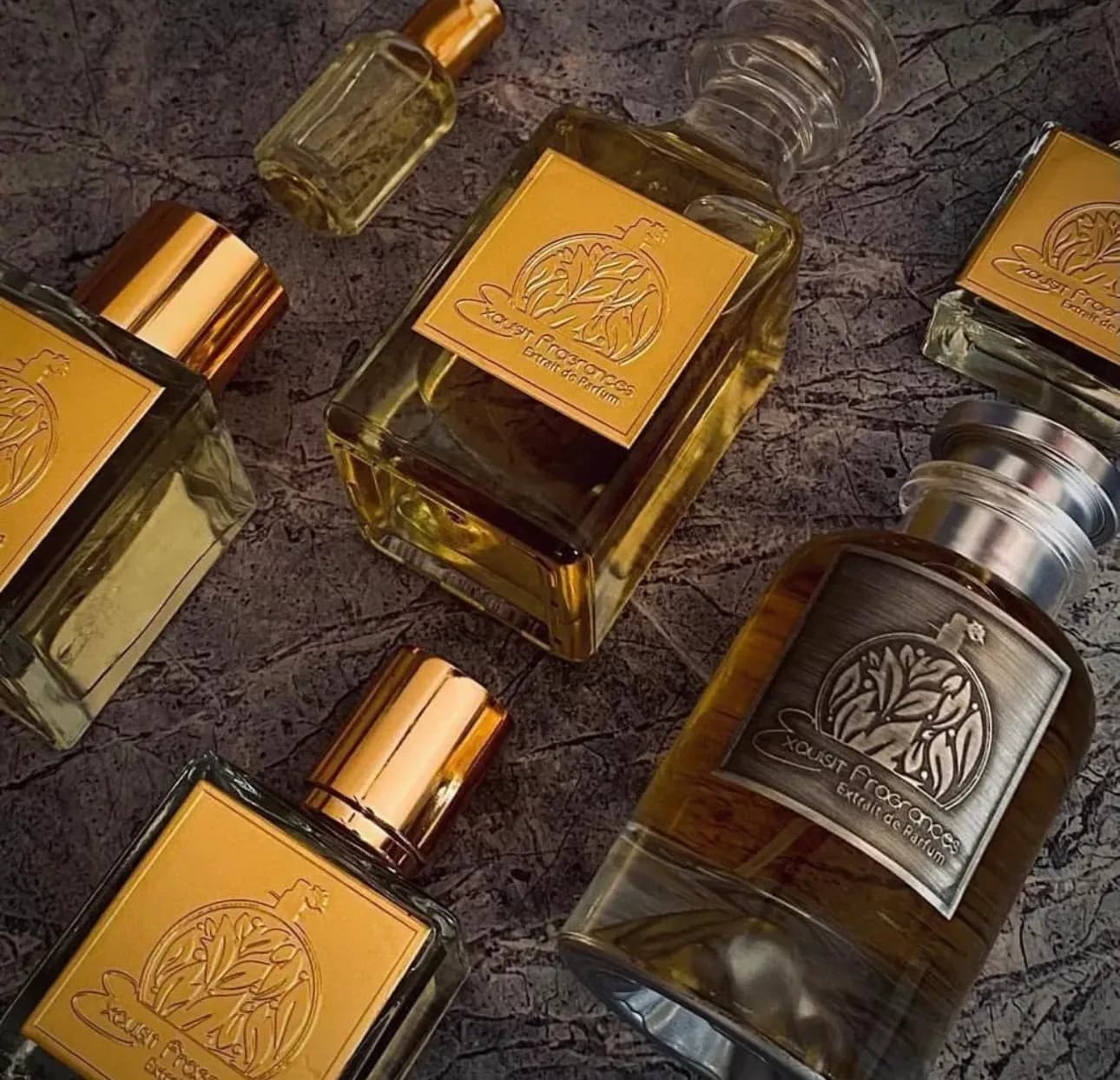
A metal label for cosmetics is a thin (1 mm), flexible, self-adhesive or screwed marker made of 100% metal, usually aluminium, tin, copper or brass, which you attach to a bottle, jar or packaging. It gives your brand instant class and stays visible for years, even after repeated handling.
Many cosmetics brands choose a metal label precisely because it feels different from paper or plastic. It radiates quality, and it follows the curve of a bottle or tube pack without coming loose.
Key features
- Material thickness 1 mm (including relief and adhesive): the actual metal layer is thinner (aluminium 0.10 mm, tin 0.16 mm, copper/brass thinner), but the 3D relief and the self-adhesive base make the whole label solid
- Flexible and bendable: the label follows curved surfaces without tearing, essential for round perfume bottles
- 3D relief built in: both the label and hard badges have a 3D effect; on the label it is more subtle, on the badge it is more visible
- Material choices: aluminium (stable outdoors, no oxidation), tin (classic, oxidises outdoors over time), copper (warm shine, patina develops), brass (elegant, finest thickness, requires 3M adhesive)
- Self-adhesive (Lohmann or 3M adhesive): depending on material; aluminium and tin get yellow Lohmann adhesive, copper and brass get 3M adhesive
- Minimum run 250 pieces: under 250 pieces is possible (via test pack), but the price per label goes up; 250 pieces is usually the cost-saving break point
- Lead time 4–5 weeks: after approval of the free digital preview; this time is needed for engraving, adhesive and quality control
- Removable without traces: with a sticker remover (no sharp tools) no adhesive residue or scratches remain

Why cosmetics brands choose metal
In the perfume and cosmetics sector, premium packaging is taken seriously. A paper label feels cheap; a metal label feels like an investment in your identity. Since 2021 we have sold over 800,000 metal labels to 1,200+ business customers in 19+ countries, and in the cosmetics segment we see annual growth. More guides on this topic are in the category Perfume & cosmetics.
For fine perfumes, skincare serums and limited-edition beauty products, the brand almost always chooses a metal label or badge. The reason: cosmetics often have healthy margins (especially perfume), and the label is still cheaper than you think. As a price example, an aluminium label costs around €1.27 each at 250 pieces and drops to about €0.60 each from 2,500 pieces (excluding one-off die-cut and print costs).
From experience we know cosmetics brands want three things:
- Visible quality, the label must be seen and felt
- Flexibility, it fits a curved bottle without problems
- Durability, years later the label still looks the same
A 1 mm metal label meets all three.
Material advice: aluminium, tin, copper or brass
Each metal has its own character and practical implications. All variants and prices are on the page 1 mm metal labels. All variants and prices are on the page 1 mm metal labels.

Aluminium: stable and suitable for all conditions
Aluminium does not oxidise and stays good, even if your bottle sits for years in sunlight or in a bathroom. That is why it is our standard recommendation for cosmetics that are stored outside or transported a lot. Read our guide on labels for perfume bottles. Read our guide on metal label finishes.
Aluminium gets yellow Lohmann adhesive from Germany, which is strong and durable. A big advantage: aluminium is cheaper than tin or copper, so your label costs less per piece.
Tin: classic, but oxidises outdoors
Tin gives a silver-grey, classic look. Many vintage cosmetics brands choose tin for that nostalgic feel. But tin oxidises outdoors over time, even with the protective layer. So we advise against tin if the label sits outside (garden, car window). For indoors, make-up box, bathroom cabinet, tin is excellent.

Tin also gets yellow Lohmann adhesive and has the same material thickness as aluminium (0.16 mm).
Copper: warm shine and slow patina
Copper has a warm, gold-like shine that feels premium. Over the years copper gets a natural patina (dark brown/green patination), which some brands want on purpose. This is oxidation, but many brands see it as character. Read our guide on having a metal logo made. Read our guide on metal label thickness.
Copper requires 3M adhesive and is more expensive than aluminium or tin. For very large copper labels we recommend a thicker Lohmann adhesive, because surface tension can otherwise lift the edges.
Brass: elegant, fine, but delicate
Brass is the finest material (only 0.06 mm real metal) and gives a warm golden look. But because it is so thin, it can get damaged in rough transport. Brass gets 3M adhesive and is the most expensive per piece.
Our practical experience: choose brass only if your label is small and you know it will be well protected. For large labels (over 10 cm²) I would go for aluminium or copper.
Labels on curved cosmetics bottles: why 1 mm is the standard
A cosmetics bottle is usually round or slightly curved. A 1 mm metal label follows this curve without problems; it simply bends along. A hard badge of 2–3 mm is rigid and would not wrap well around a curved bottle; you get wrinkles or the label stretches.
This is one of the most common mistakes: brands order a badge because they want more presence, but badges are really for flat surfaces (desktops, machines, furniture). For your cosmetics bottle: take the 1 mm metal label.
For bicycles the same principle applies: a bicycle maker almost always chooses the metal label because the frame is curved.
Self-adhesive or screwed: what suits cosmetics
A metal label can be fixed in three ways:
Self-adhesive (standard). You stick the label directly on the bottle or box. The adhesive is permanent; it will not come off. This is most common in cosmetics.
With a screw or bolt. If your bottle has holes, you can drill a small hole through the label and fasten it with a bolt. This is rare in cosmetics, more common in industry or furniture.
With a magnet. Only possible if the surface beneath is magnetic (iron). Not suitable for glass or plastic bottles.
In cosmetics we recommend self-adhesive. The adhesive is stronger than you think and will not come loose, even in a humid bathroom. See our custom metal labels and choose your material and fixing method. More background on perfume can be found on Wikipedia.
Size, shape and custom options
Most cosmetics labels are small to medium: 3–10 cm². A classic perfume label is round or rectangular, 4 × 3 cm.
We can cut any size and shape: round, oval, rectangular, heart, or fully custom. The largest standard size is 180–220 mm; for labels larger than 100 cm² we charge per cm² (price example €0.04/cm²).
Practical tip: if your label is larger than 10 cm², make sure it is thick enough and that you have the right adhesive. Copper and brass above 10 cm² need extra strength; aluminium is more reliable.
Design and 3D relief
Your logo or text is engraved in 3D relief. This means the letters or shape rise up from the label; you can feel it when you rub over it. This adds a lot of class and sets you apart from a flat paper label.
The 3D effect gets stronger with more contrast between the relief (raised) and the flat section (recessed). If your logo has many details, the relief becomes finer and less prominent. This is normal and suits the 1 mm thickness.
We send a free digital preview before production, so you see how your design looks in 3D. Your approval sets the moment we start cutting.
Who is a metal label for?
Perfume and fragrance brands
Perfect match. Perfume is premium, the bottles are often round, and a metal label feels exactly right. Labels for perfume bottles give your brand a luxury image that paper cannot offer. At 250 pieces you pay around €300–400 (including die-cut), so under €2 per label. For a 100 ml perfume bottle with €30+ margin this is almost free marketing.
Skincare and serums (small volume, high gross margin)
The skincare category is growing fast. Whether you sell a vitamin C serum or a face oil, a metal label gives an instant indie-luxury vibe. Skincare bottles are almost always round or curved; the 1 mm label fits perfectly.
Limited editions and gift sets
If you make limited-edition products or assemble gift sets, a metal label is almost a must. It feels special, and customers like to keep the pack. This also drives review and word-of-mouth marketing.
Creative entrepreneurs and DTC brands
Direct-to-consumer (DTC) cosmetics brands use metal labels to stand out from large manufacturers. A metal label says: we care about details.
Price, timing and practical steps
A metal label for cosmetics costs not much more than you think. As a price example: aluminium label about 3.5 × 3.5 cm, around €1.27 each at 250 pieces, dropping to €0.60 each at 2,500 pieces (excluding one-off die-cut and print costs).
The exact price depends on size, shape, material and quantity. Use the pricing calculator on our product page or request a tailored quote.
Timing: you need 4–5 weeks from approval to delivery. So plan ahead if you need labels for a launch.
- Choose your material (aluminium for stable, tin for classic, copper for warm, brass for elegant).
- Design your label and upload it as a PDF or AI file.
- We send a free digital preview.
- You approve; we start cutting and printing.
- After 4–5 weeks you receive your labels.
Common questions answered
A common misconception: 'A metal label is not durable outdoors.' This is only true for tin, copper and brass. Aluminium is the choice for outdoors because it does not oxidise. For indoors (bathroom, make-up box) you can use any material.
Another frequent one: 'Can I remove a label later without traces?' Yes. Use a sticker remover (no sharp tools, no knife or spatula), and no adhesive residue or scratches remain.
And: 'How do I fix a label on a curved bottle without wrinkles?' This is the main reason why 1 mm is right: it simply bends along. Position your label and press gently all around. No wrinkles, no gaps.
Bottom line: metal labels for cosmetics, yes, if you are growing
Yes, you should seriously consider a metal label for your cosmetics if your brand is growing and you want to stand out. It is not much more expensive than paper, it feels better, and it sets you apart from brands that keep using paper stickers.
No, if you make a micro-batch of under 50 pieces, the one-off costs (die-cut, preview, setup) are relatively high. In that case paper is wiser for now, until you reach 250 pieces.
Our strong advice: choose aluminium or copper for cosmetics. Aluminium is stable, low-cost and flexible. Copper gives warmth and character. Tin and brass are beautiful, but less practical, unless you know your label stays indoors (tin) or your bottle is very small (brass).
Since 2021 we have delivered over 800,000 metal labels, and 95% of our customers reorder. That says something about quality and value. The same can apply to your cosmetics brand.
