
What are doming labels?
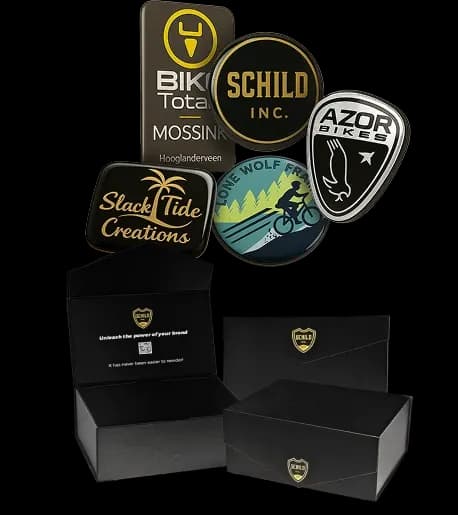
Doming labels are flexible metal labels (1 mm thin) with a glossy, tactile 3D resin dome applied. That dome is about 1.5–2 mm high and gives the label depth and a premium look. The whole is bendable, self-adhesive, scratch-resistant and UV-resistant, ideal for product branding on surfaces that are not flat.
Key features
- Glossy 3D resin dome: tactile depth of 1.5–2 mm, much more elegant than a flat label
- Fully bendable: 1 mm thick metal follows almost any curve (frames, mudguards, curves)
- 100% metal: core of tin, copper, brass or aluminium, no plastic look
- Self-adhesive: strong acrylic adhesive (tin/aluminium get yellow Lohmann, copper/brass 3M adhesive)
- Scratch and UV-resistant: 3–5 years of colour fastness and outdoor durability
- Minimum order: possible below 250 pieces, but from 250 pieces the price per unit is often lower
- Lead time: 4–5 weeks after approval of the free digital preview
- RoHS, REACH and WEEE compliant: mercury-free, environmentally friendly and legally compliant

Why choose a doming label: benefits at a glance
A doming label is essentially a regular metal label onto which we apply a glossy, tactile plastic layer (polyurethane or acrylic resin). That dome makes the label instantly recognisable and premium to the touch, without needing a much more expensive cast badge. More guides on this topic are in the category Doming & wooden labels. Also read our guide to metal labels. Also read our guide to doming label electronics.
From experience we know the dome also offers protection. The metal underneath is protected against scratches, and the resin itself is UV-resistant. That makes doming labels highly suitable for outdoor use on bikes, garden furniture or industrial products.
Another advantage: because the label is only 1 mm thick, it follows any curve. Do you want a label on a curved bike mudguard or on a cylindrical object? Then always choose the doming label, never a rigid badge. A hard 3 mm badge cannot do that.
Materials: which metal should you choose?
With doming labels you can choose from four metals, each with its own character. All versions and prices are on the page dominglabels. All versions and prices are on the page dominglabels.

Tin gives a classic silver appearance. It oxidises over time in outdoor use, even with the resin dome on top. It turns dark or blackish, which some brands appreciate (patina effect). Our tip: use tin if you accept that authentic, aged look and do not want to keep silver. For guaranteed colour we recommend aluminium.
Aluminium holds up well outdoors. It oxidises less quickly than tin and keeps its silver shine much longer. Ideal for outdoor products or if you prefer no patina.
Copper and brass give a warm, classic look. Copper turns greenish (patina) and brass becomes darker. Both are durable and elegant, but only for applications where that ageing process is desired, usually indoors or in protected environments.
In practice we recommend: copper or brass for furniture and woodworking (where oxidation is part of the charm), aluminium or tin for bikes and outdoor use, and tin for everything in between.
What does the dome look like in real life?
The dome feels smooth, glossy and has a slight bulge. When you run your finger over it, you feel the label is slightly raised; that 3D effect gives the label a premium character. The contrast between the glossy surface and the metal beneath makes the logo or brand sharp and clear. Also read our guide to having a metal logo made. Also read our guide to domed stickers.
More importantly: that dome also protects. Flat, printed labels seem to absorb dirt, oils and sunlight and tear. A doming label, with that protective layer on top, stays intact much longer, the dome flexes and prevents tearing.
Fixing: four methods
Doming labels are flexible and can be fixed in different ways.
Self-adhesive (standard): the acrylic adhesive is on the back. Clean and dry the surface, press the label on and you are done. Note: oiled or waxed wood (many pieces of furniture) adheres less well; there we advise mechanical fixing.
Magnet: for iron or steel parts. You stick or attach a magnetic tab to the back of the label. Handy if you want to swap labels later.
Screw or bolt: drill a hole in your surface, place the label over it and put a small screw through the pre-punched hole in the label. This is the strongest method for curves, bikes and industrial applications.
Special adhesive: for extreme conditions we offer industrial epoxy adhesive, stronger than standard acrylic, but harder to remove.
From experience: if the surface is uneven, warm or damp, do not choose the self-adhesive variant. Self-adhesive works best on clean, flat metal and plastic.
Who are doming labels for?
Bike manufacturers and accessories
A bike frame or mudguard is almost always curved. That is why bike builders always choose the metal doming label, it follows that curve without breaking. A rigid hard badge is not possible, and a printed label wore out quickly due to weather and friction. Doming labels also give your bike that premium touch that customers notice and feel.
Furniture makers and woodworkers
In the segment labels for furniture we see many doming labels for luxury sofas, chairs and cabinets. Although much furniture is flat, a dome label gives more prestige than a flat metal label. Plus: on waxed wood, self-adhesive sticks less well; there you choose magnet, screw or special adhesive.
Perfume, cosmetics and wine
With labels for perfume bottles and wine bottles we see many doming labels for premium brands. The resin dome feels luxurious and the metal look feels valuable, much better than plastic. Glass is smooth, so self-adhesive works perfectly here.
Musical instruments
Labels for musical instruments can be both flat and curved (backs of guitars, tuners, amplifier covers). A doming label fits everywhere: it follows curves, looks premium and is sturdy enough to last 10+ years. More background on epoxy resin can be found on Wikipedia.
Candles and interior
On labels for candles and interior products a doming label adds class. While many manufacturers use paper, you set yourself apart with metal, especially if you want to keep the dome sparkling.
Price and lead time: what to expect
Doming labels start around €0.57 each (price example), depending on size, metal type and volume. Usually the unit price drops as you order more.
The minimum order is 250 pieces. For new customers we offer a test pack of 50–100 pieces, so you can check quality and fit first. Quantities below 250 are possible, but the unit price then rises considerably; 250 pieces is usually the break-even point.
Delivery takes 4–5 weeks after approval of the free digital preview. We will first send you a digital mock-up (PNG or PDF) of your design on the label at no extra cost. That way you (and we) can see exactly what it looks like before we start production.
Request a tailored quote and we will give you an exact proposal within one working day.
What happens if a doming label gets damaged?
The dome itself rarely scratches (that is the advantage). But if you have to remove a label later, for example because you return or modify the product, it is best to use a sticker remover (such as a plastic spatula hook or commercial resin remover). We advise against sharp tools, as you could then scratch the dome or the metal underneath.
With careful removal (and possibly some heat from a hairdryer) you can take the label off cleanly without adhesive residue or marks.
Doming labels vs hard badges: the difference
Both have 3D relief, but they work very differently.
A doming label is 1 mm thin metal with a layer of resin on top. It is bendable, light and ideal for curves.
A hard badge is 2–3 mm thick cast metal (actually a coloured zinc alloy that imitates metal). It is rigid, heavier and cannot bend; you fix it with a screw through a hole, a magnet or industrial adhesive.
Both are durable and look premium. Choose the label for flexibility and light products, the badge for heavy industrial applications where rigidity is needed.
Certification and environment
All doming labels from Schild Inc. are certified RoHS, REACH, ELV and WEEE compliant. That means: mercury-free, free of banned heavy metals, and safe for recycling. We manufacture in the EU and since 2021 have delivered more than 800,000 metal labels to 1,200+ business customers in 19+ countries, so you can count on quality and compliance being in order.
The resin itself (mostly polyurethane) is also environmentally friendly and does not break down into toxic substances. At the end of its life the label can be processed together with metal recycling.
FAQ: most frequently asked questions about doming labels
See the JSON field "faqs" for the full list.
Conclusion: yes, doming labels are a smart choice
Yes, if you need a premium, flexible label for products with curves, outdoor use or brands that want to radiate class. Doming labels cost more than printed stickers but less than cast badges. They are bendable, durable, feel luxurious and are protected against weather and scratches. For bikes, furniture, musical instruments, cosmetics and wine they are the standard.
No, if you need a very rigid plate (then choose the hard badge), or if budget is your absolute limit (printed is cheaper). Also if you order far below 250 pieces, it quickly becomes expensive per unit, although we offer test packs.
Our experience: brands that choose doming labels once, order again. 95% of our customers reorder. That says enough.
Questions about your specific project? Send us your design, size and quantity. We will give you a free digital preview and quote.
