

What is the difference between metal badges and labels?
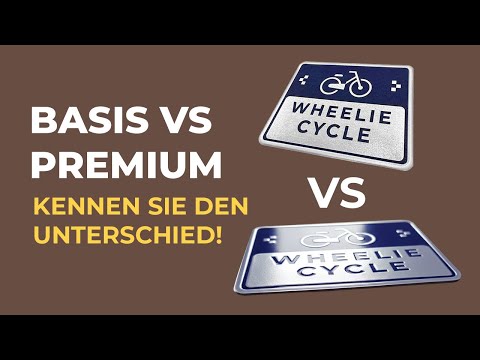
Metal labels are thin (1 mm), flexible plates of 100% metal, tin, copper, brass or aluminium, usually self-adhesive or magnetic. Hard badges, by contrast, are cast from a coloured zinc alloy, 2–3 mm thick and completely rigid. The choice depends on your product’s shape, the fixing method and how much relief you want to see.
Key points
- Metal label: 1 mm thin, flexible, follows curves, 100% solid metal, self-adhesive or magnetic; can be ordered under 250 pieces (more expensive per piece).
- Hard badge: 2–3 mm thick, rigid cast zinc alloy, strong 3D relief, fixing via pre-drilled hole (screw/bolt) or adhesive/magnet; minimum 250 pieces.
- 3D effect: Both have relief, but on a badge the contrast is more visible due to the greater thickness and coloured base.
- Material choice: Aluminium is best for outdoors; tin, copper and brass oxidise over time, even with a protective layer.
- Lead time: 4–5 weeks after approval of a free digital preview; no physical samples, but test packs of 50–100 pieces for labels.
- Price of hard badges: Start around €0.90 per piece (depending on size and material); request a detailed quote for your exact quantity and size.

When should you choose a metal label?
The metal label is your best choice as soon as your product is not completely flat. Picture a cyclist who wants to stick a label on the frame. The frame is curved, and only a flexible 1 mm label follows that curve smoothly. A 3 mm badge would keep standing off the surface and would come loose in the end. More guides on this topic are in the category Metal labels. Also read our guide on metal labels. Also read our guide on metal label thickness.
The self-adhesive version (with Lohmann adhesive for tin, aluminium or brass; 3M adhesive for copper) works perfectly on most smooth, dry surfaces. If you are worried that adhesive will not be enough, or you work with oiled wood, you can choose screw mounting. From experience we know that self-adhesive sticks worse on waxed surfaces, so we recommend screws or magnets there.
If you like to start small and test first, you can order a test pack of 50 or 100 pieces. After that, 250 pieces is usually the most cost-effective, because the price per piece rises sharply below that volume.
When should you choose a hard badge?
The hard badge is for heavy-duty use on flat surfaces. Think of a wooden door handle, a furniture panel or an industrial nameplate. The 2–3 mm thickness gives a solid impression and the 3D relief really stands out. This is what many manufacturers want when brand visibility and a premium feel matter. All versions and prices are on the page 3 mm hard badges.

You fix a badge with a screw or bolt through the pre-drilled hole (not with threads, that would damage the zinc alloy). Alternative: strong structural adhesive or a strong magnet on the back.
Note: you cannot order a badge under 250 pieces. That is the absolute minimum. If you need much smaller quantities, the metal label is your only option.
Material and oxidation: an important practical fact
This happens more often than you think. An entrepreneur chooses tin because it sounds “silvery”, uses it outdoors, and after six months it has turned dark grey. Tin oxidised, despite the protective layer. The same applies to copper (green patina) and brass. Also read our guide on having a metal logo made. Also read our guide on metal label finishes.
For outdoors we always recommend aluminium . It keeps its colour and does not darken. If you still want to use tin, copper or brass outdoors, you must accept that it will fade over time. That is not necessarily bad (it becomes authentic), but you must choose it consciously.
A printed top layer also protects, but then you barely see the bare metal. Where metal is exposed to air it can still partly oxidise.
The 3D effect: the stronger the contrast, the better it looks
Both the label and the badge have 3D relief. That is not a distinction. The difference is that the badge is thicker, so the relief is relatively more visible. A subtle label works well on a perfume bottle, where space is limited. On a large furniture leg you want that full, deep effect of a badge.

The contrast determines how much impact the relief has. Shiny silver with black accents? Very dramatic. Matt silver on matt silver? More subtle. From experience we know you get the most from the 3D effect when you combine two different shades or gloss levels.
Who is this topic relevant for?
Bicycle manufacturers and builders
Bikes are almost always curved. Frame, mudguard, seat tube. Bike labels and accessories must be flexible. You always use the metal label, never the badge. The label adapts to the geometry and stays put.
Furniture makers and woodworkers
Here you have both options. On a flat furniture leg or cabinet door the badge works perfectly and looks premium. On a curved armrest or handle choose the label. Labels for furniture are usually ordered by our customers in silver or gold, 250–1,000 pieces per series. More background on oxidation can be found on Wikipedia.
Perfume, cosmetics and candle brands
Here the label is popular. Bottle or jar is smooth and flat, and you want subtlety. Since 2021 Schild Inc has sold over 800,000 metal labels to 1,200+ customers in 19+ countries, and perfume is one of our fastest-growing uses. Labels for perfume bottles and labels for candles are standard, but badges also work if you want a full front-face look.
Musical instruments and audio
Guitar, amplifier, headphones, both work here. Labels on the side or bottom for flexibility. Badges on the front for brand elevation. Labels for musical instruments are popular in tin and aluminium.
Industry and engineering
Type plates, nameplates, data plates. You see many badges here, mainly because reliability and durability carry a lot of weight. For heavy industry we recommend aluminium (no oxidation risk). A specific stainless steel nameplate product is in preparation. The aluminium metal label is currently the most suitable for industrial applications.
Removal and care
If you want to remove a label later, use a sticker remover (no sharp tools). This prevents scratches and glue residue. You can remove a badge by loosening the screws or, if glued, pulling it off carefully, but removing glue residue is harder than with labels.
Small runs and price
You say: I want to test under 250 pieces. For metal labels this is possible. You do pay more per piece. A test pack of 50–100 pieces costs a fair amount. But you get no surprises when you order the full 250. See our custom metal labels and request a test quote.
For hard badges the rule is: 250 is the lower limit. You cannot go smaller. That is why we advise newcomers to experiment with labels first.
Lead time and process
Both take 4–5 weeks after approval of your free digital preview. So you first see what the label or badge will look like before we start production. This avoids misunderstandings. Free sample packs (small quantities) are available for labels. For badges the minimum run of 250 applies.
Conclusion: which should you choose?
Yes, a metal label, if your product is not flat (bikes, bottles, curved parts), if you have a low budget or want to test small, or if you want subtlety. The label is flexible, fits everywhere and is cost-conscious for small runs.
Yes, a hard badge, if your product is flat (furniture, cabinet door, nameplate), if you want full 3D effect and a premium feel, and if you need at least 250 pieces. The badge feels solid and makes an impression.
Still unsure? Our advice is to start with the material that best fits your product. Not the other way round.
---