

What is an outdoor bike label?
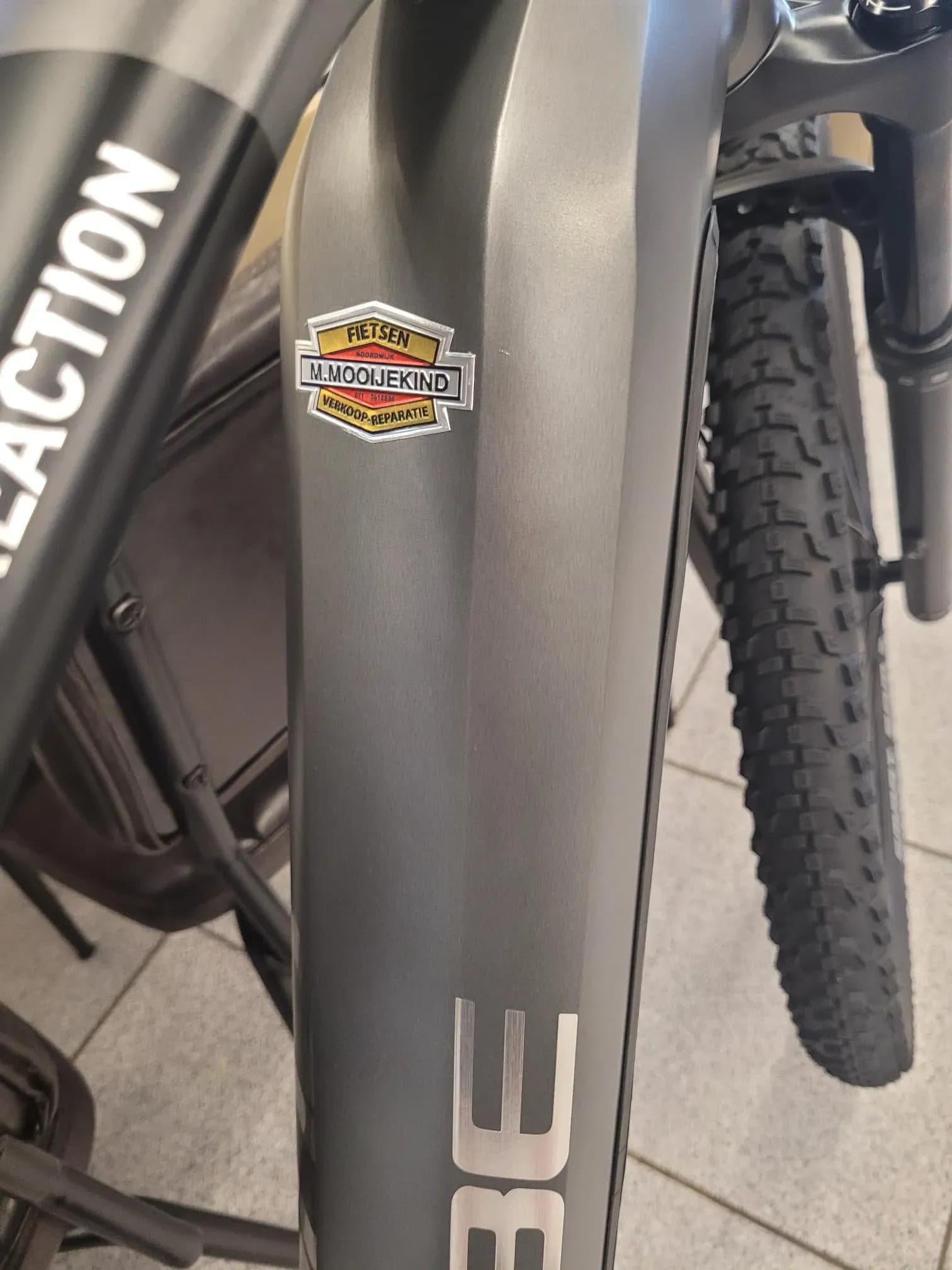
An outdoor bike label is a 1 mm thin, flexible metal label that is stuck to your frame, mudguard or head tube and withstands rain, sun and temperature changes for years. It sets your brand name or logo apart from other manufacturers and gives your bike a premium look, something a normal sticker does not offer. When choosing the right label for outdoor use on your bike it is mainly about material and adhesive choice: not every metal is equally suitable for weather exposure.
Key features
- Material thickness: 1 mm total (including relief and self-adhesive layer); the actual metal layer varies from 0.06 mm (brass) to 0.16 mm (tin)
- Material choice for outdoors: aluminium stays stable and does not oxidise; tin, copper and brass oxidise over time outdoors, even with a protective layer
- 3D relief: both label and badge types have a 3D effect, but it is subtler on the label because of the thinness
- Fixing: self-adhesive with Lohmann or 3M adhesive, depending on the metal; no screw mounting or drill hole needed
- Flexibility: the label fully follows curved surfaces (frame, mudguard); a rigid 3 mm badge does not fit there
- Lifespan: with aluminium and good adhesive 5–10 years outdoors without noticeable wear
- Removal: with adhesive remover without scratches or adhesive residue; permanent adhesive (on request) makes it stay fixed
- Minimum run: 250 pieces as standard; below 250 is possible, but unit price rises significantly

Why aluminium is the right choice for outdoors
When you use a bike label outdoors, oxidation plays a big role. Here you must be honest: tin, copper and brass oxidise over time outdoors, even despite a protective layer. You see it especially with tin as the label ages: it gets a dull grey layer that removes the metal sheen. With copper and brass a patina appears, a brown-green or dark green discolouration that some people like (vintage effect), but for a modern bike brand it is usually not desired. More guides on this topic are in the category Metal labels. Read our guide on bike frame label.
Aluminium on the other hand stays stable. It does oxidise chemically (that is part of the material), but it forms a protective aluminium oxide layer that seals the metal underneath, so it looks the same after years. This is the reason why bicycle manufacturers and brands almost always choose aluminium for outdoor applications. With good self-adhesive adhesive (yellow Lohmann adhesive) aluminium bonds very well to aluminium and steel bike parts.
In practice we advise against using tin or copper outdoors. Your label looks greyer after one season, and then the visual effect is gone, exactly what you wanted to achieve with the brand label. A bike label should represent your brand name for years, not fade in appearance.
Flexibility: why the metal label works better than a hard badge
A common mistake is thinking you can use the same hard badge (3 mm) for a bike label as for a flat surface. A mudguard, frame or head tube are curved, and that is the problem. All versions and prices are on the page bike labels and accessories.

A metal label is 1 mm thin and flexible, it bends with the curve of your frame without kinks or cracks. This gives full adhesion and looks smooth. A hard badge of 2–3 mm is completely rigid. If you stick it on a curved surface, the edges stay loose and the label starts to come off after a few months, especially due to temperature changes and vibrations. The badge does not want to bend, so the adhesive gets too little contact with the surface.
For bike brands the metal label is the only realistic option. It follows the natural forming of the bike and ensures your label stays put for decades, provided you choose aluminium and good adhesive.
The right adhesive for aluminium bike parts
Not all self-adhesive layers are the same. For an aluminium label on an aluminium or steel bike part we use yellow Lohmann adhesive (German manufacturer), which is optimised for this metal pair. This adhesive holds well, stays flexible and does not age quickly in sunlight or rain. Read our guide on bike labels bike shop.
When you use your label outdoors in all weather, this combination works reliably. The adhesive does not build stress when temperatures swing (which happens to a bike outdoors: cool in the morning, warm in the afternoon). Preventing internal stress is crucial; without good adhesive labels on bikes come loose because thermal stress peels them off.
There is also a non-standard permanent adhesive option (on request) where the label stays on for good. Choose this if you are sure you will never want to remove the label. For most manufacturers that is unnecessary; the standard Lohmann adhesive is sufficient.
Look and brand position: the real advantage
The main advantage of a metal bike label is not the tech; it is how it makes your bike look. A cheap plastic sticker looks cheap. A metal label, especially with a subtle 3D relief, signals that your brand stands for quality and durability. That fits modern bike brands: e-bikes cost €2,000–€5,000, and then a premium label belongs on it, not a little coloured sticker. For this sector we have a separate page: bike labels and accessories.

Bicycle manufacturers and shops choose metal labels not only for technical reasons; they do it because the visual difference is huge. If you are building a bike brand or want to set apart a premium bike model, an aluminium label is the difference between 'looks professional' and 'feels cheap'. See our custom metal labels to see how your logo or brand name looks in 3D relief. More background on aluminium can be found on Wikipedia.
Who is an aluminium bike label for?
Bicycle manufacturers and brands
Bicycle manufacturers are the primary users. Whether you make luxury sports bikes, assemble e-bikes or produce vintage-style city bikes, an aluminium label on the frame or mudguard makes the difference. More than 500 partners worldwide, from BikeTotaal to VMG, use our metal labels. The label is visible without being pushy, and it does not replace a serial number, but supports your brand identity.
Bike shops and custom builders
Shops that build custom bikes or put together limited-edition models use bike labels to add their own touch. A white or gold aluminium label on a black frame gives the bike a premium finish that customers remember. This is especially popular with boutique bike builders.
Bike accessory companies
Companies that label bike parts or gear, dynamos, saddles, frame protectors, can use the same aluminium labels. They adhere on curved parts; on flat parts they look professional.
How long do aluminium labels hold up on bikes?
With the right build (aluminium 1 mm + yellow Lohmann adhesive) you easily get 5–10 years outdoors without noticeable wear. We have seen labels that are still shiny after 8 years on bikes that stood outside daily.
Lifespan depends on three factors:
- Material: aluminium lasts the longest; tin starts to turn grey after 1–2 seasons.
- Adhesive quality: Lohmann adhesive outperforms other adhesives thanks to flexibility and UV resistance. Cheap adhesives come loose sooner.
- Mounting location: labels on the frame (less wind and rain) hold longer than labels on a mudguard (direct spray water), but even on a mudguard they do not come off thanks to the flexibility.
From experience we know that many bike labels do not disappear due to wear, but because owners want to remove or replace them (brand hierarchy changes, the bike goes to someone else). That is fine too: with an adhesive remover (no sharp tools) a label comes off without leaving scratches or adhesive residue.
Prices and minimum quantities
Aluminium labels start at a minimum run of 250 pieces. As a price example, a label of about 3.5 cm costs roughly €1.27 per piece at 250 pieces and drops to €0.60 per piece at 2,500+ pieces (excluding one-off die-cut and print costs). For new customers we offer a test pack of 50–100 pieces, so you can first see how the label looks before you order large quantities.
The exact price depends on your size, shape and finish; a logo with fine detail costs a bit more than simple text. Request a tailored quote or use the price calculator on our product page.
Lead time is 4–5 weeks after approval of the free digital preview. That gives you time to fine-tune the design before you start production.
Conclusion: yes, an aluminium bike label is the standard choice for outdoors
Yes, if you are a bike brand or label bike parts, a 1 mm aluminium label for outdoor use is the right choice. Aluminium does not oxidise, the label follows curved surfaces, good Lohmann adhesive holds for years, and the look is premium. We advise against tin and copper for outdoor use; they turn grey and lose visual impact. A hard badge is rigid and does not work on curved frame parts. For 250–2,500 pieces per year our labels are cost-effective and reliable. Since 2021 we have delivered over 800,000 metal labels to 1,200+ customers in 19+ countries, 95% of whom reorder.
