
What is sustainable product branding?
Sustainable product branding is putting your brand name or logo on products with materials and techniques that last for years without wear, fading or weathering. It is not about marketing phrases, but about a physical brand identity that shows your commitment to quality. A metal label of 1 millimetre aluminium or tin, or a cast hard badge, says more about durability than any sticker, because your customer sees that label every day and feels that it is solid.
Key features
- Material thickness and composition: Metal labels are only 1 mm thin (including relief and adhesive), made from 100% of the stated metal (tin, copper, brass or aluminium). Hard badges are 2–3 mm thick and cast from coloured zinc alloy.
- Flexibility: Metal labels bend with curves (bike frames, bottles, curved furniture). Hard badges remain rigid and therefore only fit on flat surfaces.
- 3D effect: Both have a 3D relief, but the badge shows this more strongly due to the greater thickness.
- Oxidation resistance: Aluminium stays stable outdoors. Tin, copper and brass oxidise over time, even with a protective layer, so we recommend aluminium for outdoor use.
- Fixing: Labels are self-adhesive (with yellow Lohmann adhesive or 3M, depending on the metal), or with a magnet. Badges have a hole for a screw/bolt, or stick/magnet.
- Minimum quantity: Metal labels can be below 250 pieces, but it becomes costly per piece. Hard badges really start at 250 pieces.
- Lead time and cost: 4–5 weeks after approval of the free digital preview. As a price example, an aluminium label of about 3.5 cm costs around €1.27 each at 250 pieces, dropping to about €0.60 each at 2,500+ pieces (excluding one-off diecut/print costs).
- Removal: Metal labels can be removed without damage with a sticker remover, no adhesive residue or scratches.

Why metal labels feel more durable than paper
In practice we recommend metal branding if your product itself is premium. A wooden chopping board, a hand-rolled perfume bottle, an artisanal tool, all those items feel like long-term choices. A paper sticker feels disposable, even if the product is not. A metal label, on the other hand, communicates that your brand has that level of quality. Your customer does not need to touch the label; they see it, and know at once that your support for sustainability is not a marketing trick, but part of your DNA. More guides on this topic are in the category Sustainable branding. Read our guide on having a metal logo made. Read our guide on metal label finishes.
Since 2021 Schild Inc. has sold over 800,000 metal labels to more than 1,200 business customers in 19 countries. The 95% repeat purchase rate says something: brands that make this choice, make it again.
Material choice guide: tin, copper, brass, aluminium
Each metal speaks a different language. Tin gives warmth and a classic shine; copper radiates craftsmanship; brass feels luxurious; aluminium looks modern and neutral. But durability is not only about aesthetics. All versions and prices are on the page 1 mm metal labels. All versions and prices are on the page 1 mm metal labels.

Tin oxidises the fastest outdoors (grey, rough patina after a few months). For indoor use or protected environments it is fine. Copper becomes darker and develops green patina outdoors after months. Indoors it is beautiful and stable. Brass has the same oxidation behaviour as copper, but warmer in colour. Aluminium stays greyish-neutral and does not develop patina. For outdoors, for bikes, for garden furniture: aluminium is your first choice.
A common mistake is to assume that self-adhesive means “permanent”. Adhesive is material-dependent. Aluminium and tin get yellow Lohmann adhesive (German quality). Copper and brass get 3M adhesive. For very large copper or brass labels we recommend a thicker Lohmann adhesive because surface tension can otherwise lift the edges. These are details, but they decide whether your label bonds for five years or ten.
Sustainable product branding in practice: three sectors
Furniture and woodworking
A wooden work chair, a handmade coffee table, a bookshelf from recycled wood, these products deserve a brand label that is just as serious. Here we recommend labels for furniture in aluminium or tin, self-adhesive. The label stays readable for years, even on oiled or waxed wood (where adhesive bonds less well we advise screw mounting or a hard badge with a hole).

The furniture maker wants their name not to fade after a year. With metal that is sorted. The customer, who uses that chair for years, sees every day who made it. That is sustainable branding in its purest form.
Bike frame builders and accessories
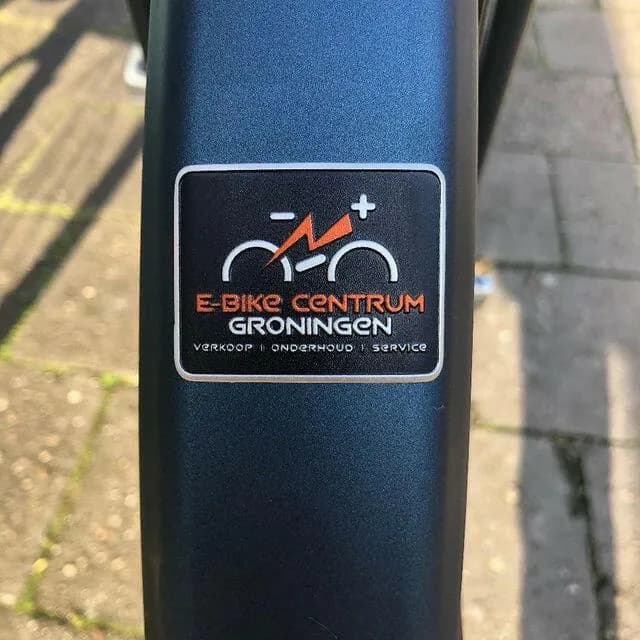
A steel or aluminium bike tube is curved. A rigid part will not fit. That is why bike makers almost always choose the 1 mm metal label; it bends with the curve of the frame or the mudguard, and sits flush. Aluminium is the material standard here (it does not rust and stays stable on the bike outdoors for months). Bike labels and accessories must last at least 4–5 weeks, because that is the lifespan of many modern bikes before they circulate. Read our guide on metal labels. Read our guide on metal label thickness.
Perfume, cosmetics and wine bottles
A perfume bottle is usually curved or tapered, not flat. A label must therefore be flexible. Here we use self-adhesive metal labels in tin or aluminium for labels for perfume bottles. The same logic applies to labels for wine bottles, a label follows the bottle curve much better than a badge. The protective layer prevents the label from fading quickly due to light and handling.
How to choose between self-adhesive and other fixing methods
Self-adhesive is the fastest, but not always the best. See our custom metal labels and think first about your surface.
On clean, smooth metal or plastic: self-adhesive works fine for years. On rough wood, waxed wood, or outdoors where temperature swings: magnet or screw mounting is safer. On curved surfaces (bottle, frame): only self-adhesive (it is flexible enough) or magnet (if your product is magnetic). Hard badges with a hole can only be screwed or fixed with a magnet onto flat, relatively strong substrates.
Our advice if in doubt: choose self-adhesive for the first order, test it, and upgrade to magnet or screw if you want. The extra cost is minimal.
Durability over time: what you need to know about oxidation
Oxidation is not always bad; tin develops a beautiful, dark patina that has charm. But if your brand name must stay readable, you must prevent the bare metal from turning black.
Tin, copper and brass oxidise outdoors slowly, even with a protective layer. That does not mean it is ruined after a year, but after two years outside you can see the metal under the top layer darkening, especially where the label is bent or scratched.
Aluminium does not oxidise; it stays grey-neutral and stable. For outdoors, for bikes, for weatherproof use: choose aluminium. More background on circular economy can be found on Wikipedia.
A printed top layer (with your logo in full colour) also protects. The advantage: you do not see the bare metal. The disadvantage: where the label is damaged, the underlying metal can still oxidise, and then you see a grey strip under the print.
From experience we know that the perfect choice depends on how important it is that the brand label stays identical over time. For a bike brand: aluminium without a top layer, it looks classic. For a perfume brand: aluminium with colour print, then your label looks luxurious and protected.
Who is sustainable product branding for?
Artisanal and premium brands
If your products are handmade, artisanal, or high quality, a metal label will strengthen your brand position. It signals that you do not cut corners. A bakery, a woodworker, a boutique perfumer, these categories see a lot of demand for sustainable branding, and rightly so.
Sustainability-oriented companies
If sustainability is part of your mission (circular economy, long-lived products, local production), then a metal label also makes sense. Schild Inc. produces in Europe, and needs no plastic packaging. So you communicate what you do; you are consistent.
Brands that want to build trust for years
A metal label feels permanent. It says “we expect you to keep this product for years.” Small brands that want to stand out from mass-produced alternatives use this signal. Your customer notices the difference on day one.
Frequently asked practical questions
In our experience you often see the same questions. Here are the direct answers.
Can I remove a metal label myself without leaving traces? Yes. Use a sticker remover (plastic or rubber, no sharp tools) to gently peel the label off. The adhesive comes away, and your surface stays undamaged. This works for almost all metal labels that have been on for no longer than two years.
Which metal does a bike maker always choose? The 1 mm metal label, because it is flexible and follows the curved bike tube. A rigid 3 mm badge would lift or crack under stress. Aluminium is the material standard due to oxidation resistance.
How much does a metal label really cost? An aluminium label of about 3.5 centimetres in size costs around €1.27 each for an order of 250 pieces, and drops to about €0.60 each at 2,500+ pieces (excluding one-off diecut and print costs). Use the price calculator for your own size and material.
Can hard badges also be used outdoors? Yes, hard badges made from zinc alloy do not oxidise and are stable outdoors. The difference is that they are rigid; they only fit on flat, sturdy surfaces. On a curved bottle or bike tube they do not fit.
How long from order to delivery? 4–5 weeks after you approve the free digital preview. This gives both parties time for accuracy. You do not get personal prototypes, but a sample pack by appointment.
Bottom line: sustainable product branding is not a trend
Yes, sustainable product branding is the right choice if your product itself is durable, and you want your brand to prove it. A metal label of 1 mm aluminium or tin, cast in Europe, says more about your standard than ten slogans. Your customer touches it, sees it years later, and knows: this brand takes itself seriously.
No, do not choose sustainable branding if your product itself is disposable or if you already want different labels next month. Paper is then honest and effective.
Schild Inc. makes this clear. Request a quote, test with 50–100 pieces (for new customers), and then decide if this is your next step. 95% of our customers order again. That says enough.
