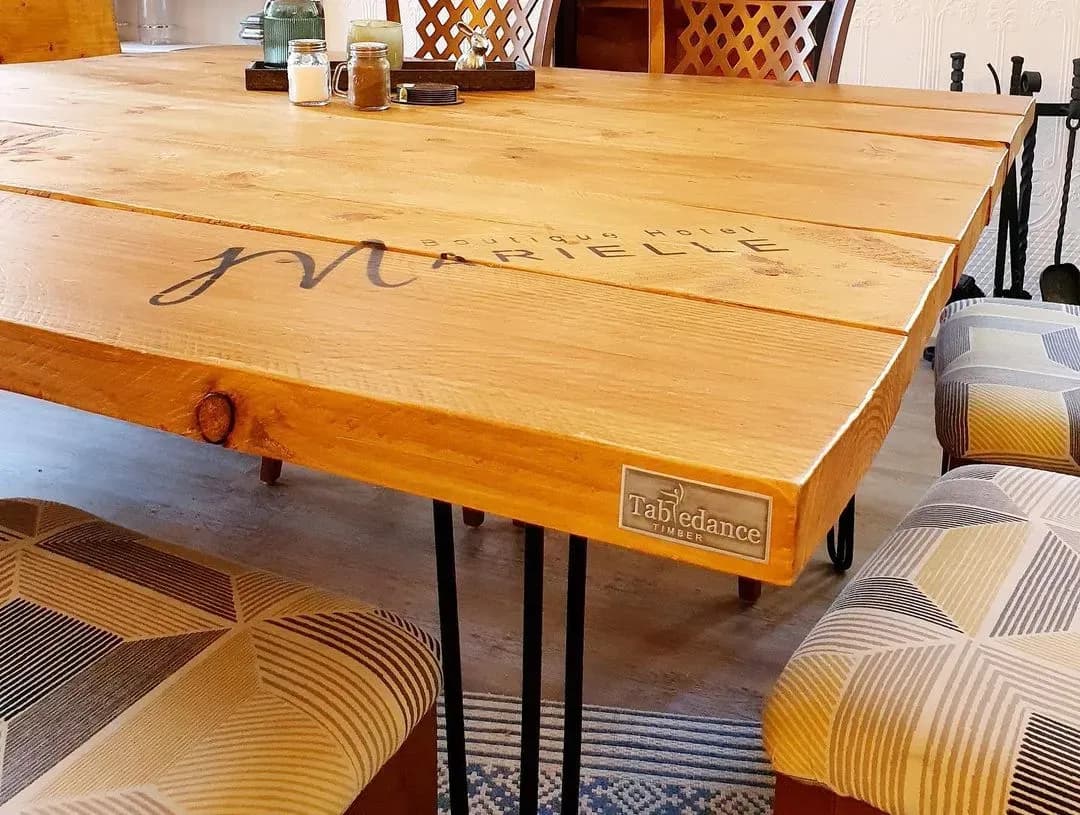


What is a furniture nameplate? A furniture nameplate is a small metal or plastic tag that is applied to furniture to indicate the maker, the brand, the series or the production data. It serves as a signature of craftsmanship and authenticity.
Key features
- Material: metal labels are 100% tin, copper, brass or aluminium; hard badges are made of coloured zinc alloy
- Label thickness: 1 mm including 3D relief and adhesive, very flexible and bendable
- Badge thickness: 2–3 mm, rigid, not bendable
- Fixing for labels: usually self-adhesive (aluminium and tin get yellow Lohmann adhesive, copper and brass 3M adhesive); magnet or screw mounting also possible
- Fixing for badges: screw or bolt through a predrilled hole, or adhesive
- 3D effect: both have relief; on the thicker badge it is more visible
- Minimum quantity: metal labels can be under 250 pieces (but price/piece goes up), badges really start from 250 pieces
- Lead time: 4–5 weeks after approval of the free digital preview
Why choose a nameplate for your furniture
A nameplate is not a luxury, it is brand identity. Customers see it as proof that you take your craftsmanship seriously. For handmade or limited-edition furniture a quality nameplate gives your work instant dignity. It does not have to be large; a small label of 3–5 centimetres often suffices. More guides on this topic are in the category Furniture & woodworking.

In practice we recommend: choose the nameplate before you finalise the furniture. If you are still designing, you can already decide whether the label will go on a flat surface (seat, back) or on a curved part (armrest, leg). That will determine which product suits later.
The difference between metal label and hard badge
There is a lot of confusion here. Many makers think a “badge” is automatically better than a “label”, that is incorrect.
A metal label is 1 mm thin and flexible. It bends with curves and corners. Because it is so thin, it adheres well to wooden surfaces, and you see the true metallic shine. In the design you can put lots of detail into the relief; the thin form makes it elegant.
A hard badge on the other hand is 2–3 mm thick and rigid. The relief is stronger, but it does not bend. On a curved armrest or a table leg it will not fit, or it will look odd. Hard badges are better for flat, solid substrates: front edges of cabinets, rectangular tables, panels.
From experience we know that many furniture makers also choose the metal label, precisely because it lets you mark almost any spot on the piece. We usually reserve the badge for furniture makers who want a real statement piece and only have flat surfaces.
Which material do you choose for your furniture nameplate
The choice of material determines appearance and durability. All finishes and prices are on the page metal labels of 1 mm. All finishes and prices are on the page metal labels of 1 mm.

Aluminium is the most practical. It stays shiny, does not discolour, and is ideal if you place the nameplate where it is exposed (for example by a window or in a garden lounge). An aluminium label of 3,5 cm costs about €1,27 each at 250 pieces and drops to about €0,60 each at 2.500 pieces (excluding one-off diecut and print costs). Aluminium is supplied with yellow Lohmann adhesive.
Tin gives a classic, silvery look, perfect for vintage or retro design. Tin oxidises over time, especially outdoors. You see that as a dark layer or patina. This can be desired (authentic look), but you should know it. Tin also gets yellow Lohmann adhesive.
Copper has a warm, coppery shine. On designer furniture this looks premium. Copper oxidises fairly quickly and gets a green patina, again something you may or may not want. Copper is supplied with 3M adhesive due to surface tension.
Brass is golden and elegant. Brass also oxidises, but a bit slower than copper. Brass also gets 3M adhesive.
A common mistake is choosing tin for outdoor furniture. Tin oxidises faster outdoors than you think, even despite the protective layer. Aluminium is the safe choice for that case.
Fixing options: self-adhesive, magnet or screw
After choosing your material and size, decide how the nameplate will attach to the furniture. Read our guide on wooden labels vs metal labels. Read our guide on labels for handmade products.
Self-adhesive is the standard. The label comes with adhesive on the back. You clean the surface, position the label and press it down. This works well on smooth wood, veneer, plastic and fabric. On oiled or waxed wood self-adhesive sticks less well; in that case we recommend screw mounting or a hard badge with holes.
Remove a label later? Use a sticker remover (not sharp tools), then no adhesive residue or scratches are left.
Magnet is elegant and unseen. You use a thin bar magnet behind the label (supplied separately) and a counterpart in the furniture. This works on metal and on wood with built-in metal plates. Downside: magnets can come loose with lots of movement.
Screw or bolt is the strongest. You drill two holes in the label and run screws through into the furniture. This is really solid. For premium furniture or furniture that is on the move a lot (such as catering or design hotel sets) this is the best choice.
Size, shape and customisation
The standard size for a furniture nameplate is about 3–5 centimetres wide. Many makers choose rectangular, but square, round or even custom-shaped is also possible.

The largest size for labels is 180–220 mm. Very large labels (more than 15 × 15 cm) are charged per square centimetre: about €0,04/cm². A label of 10 × 8 cm therefore costs about €0,32 each (without diecut and print, those are one-off). More background on woodworking can be found on Wikipedia.
See our custom metal labels and enter your exact dimensions in the price calculator.
In the design of the nameplate itself: more contrast between the relief and the flat background makes the 3D effect stronger. If your logo is small, make sure lines are at least 0,5 mm thick, otherwise they will fade in the production process.
Labels for furniture in different sectors
Schild Inc. supplies nameplates for more than just traditional furniture. You also see the same demand in other craft sectors. Read our guide on metal labels for furniture. Read our guide on finishing metal label.
In furniture and woodworking, metal labels are the standard. A handmade dining table or a custom-built cabinet gets a label from the maker, this marks craftsmanship. We work with designers and craftspeople who recognise themselves in premium quality, EU production and attention to detail. Since 2021 we have delivered over 800,000 metal labels to more than 1,200 business customers in 19+ countries; 95% order again.
Such labels for furniture also end up on luxury cabinets, wall panels, and designer chairs. The customer circle reaches further than you think: Mon Atelier Connecté, Shira Living Design and Ombre & Luminare are just a few examples of furniture brands and interior makers who use metal labels as a signature.
Who is a furniture nameplate for
Furniture makers and woodworkers
If you make or build furniture yourself, to measure, limited-edition or small runs, a nameplate is almost mandatory. It gives your customer confidence that the product comes from you. It costs little, but yields a lot: brand recognition, name awareness, and potential for repeat purchases.
Interior designers and style designers
You are not the maker, but you give your styling and curation a name. A subtle nameplate on furniture you have curated puts your stamp on the whole.
Design hotels, restaurants and retail spaces
You have ordered or had custom furniture made. A nameplate with your hotel logo or restaurant name completes it, and prevents guests or competitors from thinking it is standard IKEA. For mobile furniture (catering sets, pop-up chairs) screw mounting is a good idea.
Second-hand shops and antique dealers
If you restore furniture and add your name, a label marks that it is a skilfully reworked piece.
Frequently asked questions (see also FAQ field)
Most questions come down to practical details: what about price, time, and how do I remove it later. We cover those in the FAQ.
Benefits of a metal nameplate for your brand
A nameplate adds three things: authenticity, recognition and value.
Authenticity: a handmade or limited-edition piece of furniture without a nameplate looks finished, but not complete. The label makes it complete.
Recognition: your name or logo is seen each time. Many makers report that customers recognised their work by the label, which leads to Follow-ups, reviews, and word of mouth.
Value: a piece with a maker’s label performs better second-hand. Customers are willing to pay more for something with a name and a face.
Bottom line: which nameplate suits you
Yes, choose a nameplate for your furniture, if you:
- Make handmade or limited-edition furniture and want to link your name to it
- Want to grow your brand through recognition on every piece
- Have curved furniture parts (frames, armrests, table legs): then choose a flexible metal label
- Have only flat, solid surfaces: a hard badge can have more impact
- Have outdoor furniture and want durability: aluminium is your choice
No, think twice if you:
- Produce mass furniture and this adds no distinction
- Want to stick a label on oiled or waxed wood without preparation (plan for screw mounting)
- Have a very limited budget for small runs (under 100 pieces it gets more expensive per piece)
The practical step: decide your material (aluminium for outdoors, tin/copper/brass for indoors), your size (3–5 cm is standard), your shape (rectangle, square, custom), and your fixing (self-adhesive, magnet or screw). Request a tailored quote with your design, and within 4–5 weeks you will have your first labels in house.
