
What is a metal label for wine bottles?
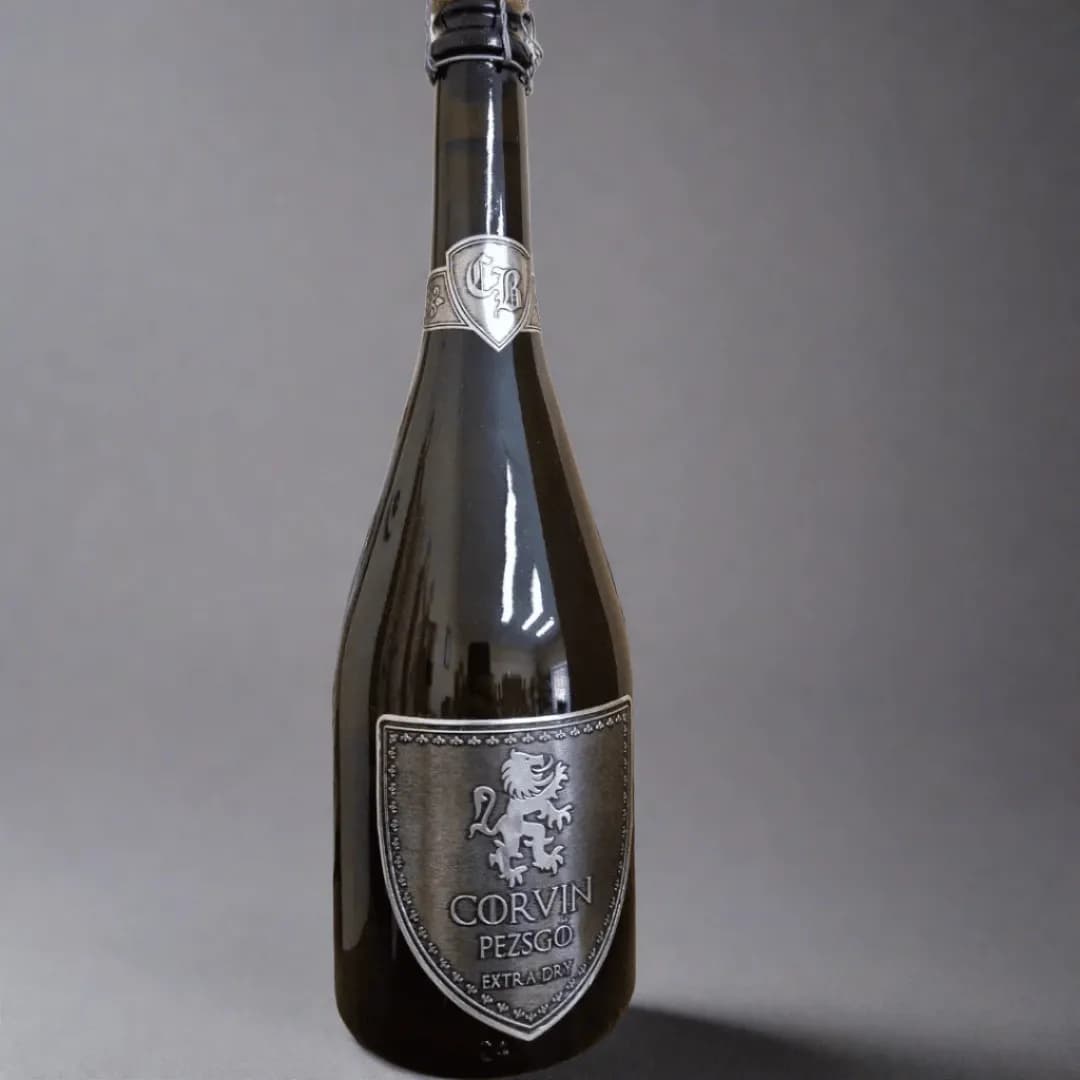
A metal label for wine bottles is a thin, flexible label made of pure metal, usually tin, copper, brass or aluminium, which you apply self-adhesively to the bottle. At 1 mm thick and with a soft emboss, it adds more character than a paper sticker, without affecting the bottle physically. It is a popular choice for premium wines, editions or giveaways.
Key features
- Material choice: 100% tin, copper, brass or aluminium, no alloy, pure metal
- Thickness: 1 mm total (including 3D emboss and self-adhesive layer), flexible enough to bend with the bottle neck
- 3D effect: subtle emboss that stands out more as you create more contrast between highlights and flat areas
- Fixing: self-adhesive (Lohmann or 3M adhesive, depending on material) or magnetic
- Oxidation behaviour: tin, copper and brass oxidise over months (especially outdoors); aluminium remains unchanged
- Minimum run: can be under 250 units, but significantly more expensive per piece; 250 units is usually cost-effective
- Lead time: 4–5 weeks after approval of the digital preview
- Price per piece: for example, about €1,27 each for 250 units (size approx. 3,5 cm), dropping to €0,60 each from 2.500 units

Why do winemakers choose metal labels
In practice we recommend metal labels mainly for expensive or limited-edition wines. A paper sticker feels cheap; a metal label instantly communicates that you invest in a premium product. For many wine producers this is the difference between "sticking on a sticker" and "building a brand." More guides on this topic are in the category Metal labels.
From experience we know that family and boutique winemakers do this most often. They have a smaller quantity to brand and care about the first impression. A coloured zinc-alloy badge (3 mm) would be rigid here and would not bend around the neck; the metal label follows the curve of a Burgundy or Bordeaux bottle without issue.
Do you want to see our custom metal labels and configure your own label with your logo and brand style.
Choice of material: tin, copper, brass or aluminium
Each material has its own character and durability. All versions and prices are on the page 1 mm metal labels. All versions and prices are on the page 1 mm metal labels.
Tin: elegant, but sensitive outdoors
Tin has a soft, silvery white sheen. Indoors (in a cellar or on a shelf) it keeps its shine for years. However, once it is outside or in a humid environment, it starts to oxidise; the protective layer helps but only slows the process. After a few months tin gets a dull grey or dark grey tint. This can give a calm, vintage effect, but it is unpredictable and not always desired. Our advice: tin for bottles that stay indoors (gift boxes, cellar collection). Read our guide on having a metal logo made. Read our guide on metal label finish.
Copper: warm shine, fast oxidation
Copper is warmer than tin, almost golden. It oxidises even faster than tin and after weeks outdoors it already develops a green or brownish patina. Some collectors like this; for most winemakers it is unwanted. Again: ideal for indoors.
Brass: gold-like, also sensitive
Brass combines the warmth of gold with a slight yellow tint. The behaviour is similar to copper: fast oxidation outdoors, attractive for collections at home. Not suitable for outdoor bottles (terraces, events). Read our guide on metal labels. Read our guide on metal label thickness.
Aluminium: durable outdoors, no oxidation
Aluminium is your best choice if the label may be outdoors. It practically does not oxidise thanks to a natural aluminium oxide layer on the surface. Aluminium has a greyish silver-white look, not as warm as tin, but stable and clean. For wines that sit on terraces, in restaurants or for export outdoors, aluminium is always the right answer.
Adhesive type and fixing: what works best
The adhesive is crucial. Schild Inc distinguishes:
- Tin and aluminium: yellow Lohmann adhesive (Germany), made for these metals
- Copper and brass: 3M adhesive, better matched to their chemical properties
- Large copper or brass labels (above certain cm²): thicker Lohmann adhesive, because the surface tension of thinner adhesive can lift the edges
In practice this means: always say which material you have chosen. Schild will automatically apply the right adhesive. You do not need to worry about it.
Do you want to remove the label later (for example for a different design or if it was applied wrongly)? Use a sticker remover (not sharp tools); no adhesive residue or scratches will remain on the glass.
Size and design on the bottle
Most wine labels are compact. A standard size for a bottle neck is about 3,5 × 5 cm; our price examples use this. For labels up to 180–220 mm we can supply in special cases; very large formats (more than this size) we price per cm² at €0,04/cm². More background about wine can be found on Wikipedia.
The shape follows your design: round, rectangular, chamfered corners, or a custom contour. With 3D emboss every label gets more depth, especially if you build a lot of contrast between the highlights (your logo) and the flat parts (background or text). The more contrast, the more visible the emboss becomes.
A common mistake: too much detail in a small label. On a 3 × 3 cm label fine lines disappear. Our advice: make sure your logo and core message remain legible at at least 8–10 mm in size, also in emboss.
Use in the wine and drinks sector
Metal labels are mainly used for:
- Limited editions and collectors' releases: a limited run feels more exclusive with metal
- Premium boutique wines: where the label makes a statement
- Gift sets and special packaging: wine as a gift feels better in a gift box with a metal label
- Events and sponsor giveaways: for example wine from a tasting or company party
At wine bottle labels you will find more real-world examples and inspiration for your own design.
Minimum quantity, price and lead time
Schild Inc works with fixed steps:
- Minimum order: 250 units (for test packs up to 100 units is possible on first orders)
- Lower quantities possible: yes, but the price per piece rises sharply. For example: 50 units would cost you more than 3× the price of 250 units. That is why we almost always advise at least 250
- Price example: about €1,27 each for 250 units (approx. 3,5 × 5 cm), dropping to €0,75 at 500 units, €0,64 at 1.000 units and €0,60 at 2.500+ units (excluding one-off die-cut and print costs)
- Exact amount: depends on your size, shape, material and colour; use the price calculator for your own configuration
- Lead time: 4–5 weeks after approval of the free digital preview
- Preview: you always receive a digital preview, free and without obligations
Since 2021 Schild Inc has sold more than 800,000 metal labels to 1,200+ business customers in 19+ countries, many of them small wine producers who need exactly these quantities.
Who are metal labels suitable for?
Boutique winemakers and small-scale producers
You have 200 bottles per year and do not want a standard paper sticker. A metal label makes your product stand out immediately. The price per bottle (around €0,60–€1,27 depending on material and run) feels acceptable because you already have margin per bottle. Schild also works with 250-unit orders, so you do not have to commit to thousands.
Gift and hamper packers
You create curated gift boxes with special wines. The metal label on such a bottle feels part of the story; it says: "this is not just wine, this is an experience." The relatively small run (250–500 units per design) is perfect for you.
Events and sponsorship
You want to brand a company wine or event bottle. A metal label makes that memorable. Many companies choose 250–500 units of a limited-edition Cuvée; the metal label adds a premium feel to it.
Not suitable for large industrial producers
At 50,000 bottles per year paper is probably more effective and cheaper. A metal label is overkill here, unless you really need a luxury positioning.
Conclusion
A metal label for your wine bottle says more than a paper sticker: it says you believe in quality. Whether you make small boutique batches or want to brand a special edition, the label transforms the moment someone picks up the bottle. Choose aluminium if it may stand outdoors; for indoors tin, copper and brass are more attractive choices. Minimum 250 units, 4–5 weeks lead time, and a price that can be from €0,60 per piece; at Schild Inc these are not choices only big manufacturers can make. Yes, a metal label suits you if you believe that first impression matters.
